Every industrial heating requirement involves different materials, temperatures, production targets and operating conditions. At SS Thermal, we begin by understanding these requirements before defining the furnace configuration, heating method, construction, material-handling arrangement and control system.
From the initial technical discussion to fabrication, installation assistance and ongoing support, each stage is developed around the approved scope of the project.
We do not begin with a standard furnace model and attempt to adapt the customer’s process around it. Our approach begins with the application—what material needs to be processed, how it must be heated, the required thermal result and how the equipment will operate within the existing production environment.
Step 01:
Requirement Understanding
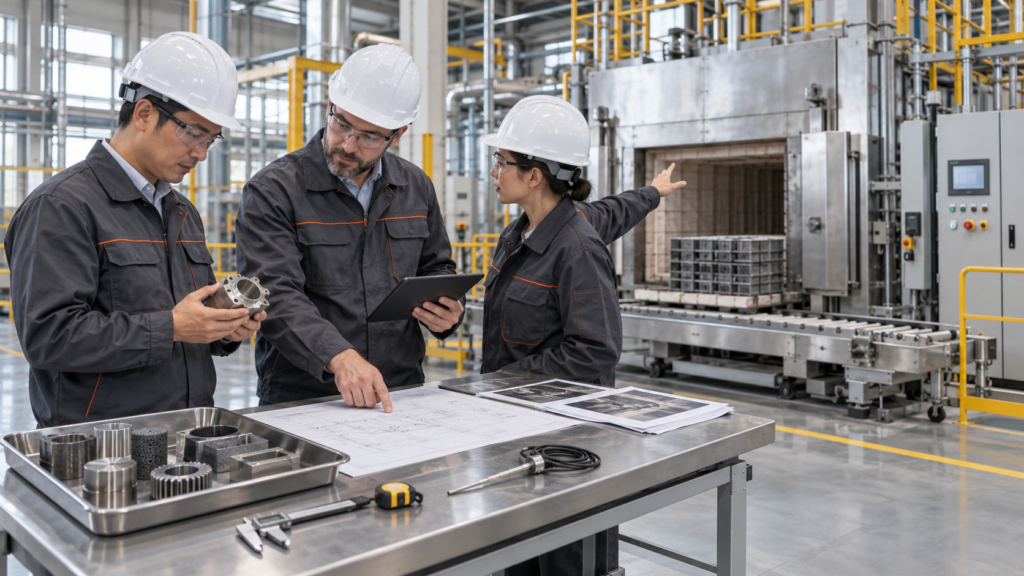
We begin by discussing the application, material, required temperature, production capacity, heating cycle, loading method and expected thermal result. Available drawings, samples, photographs and equipment details are reviewed to establish the initial requirement.
Step 02:
Process and Site Assessment
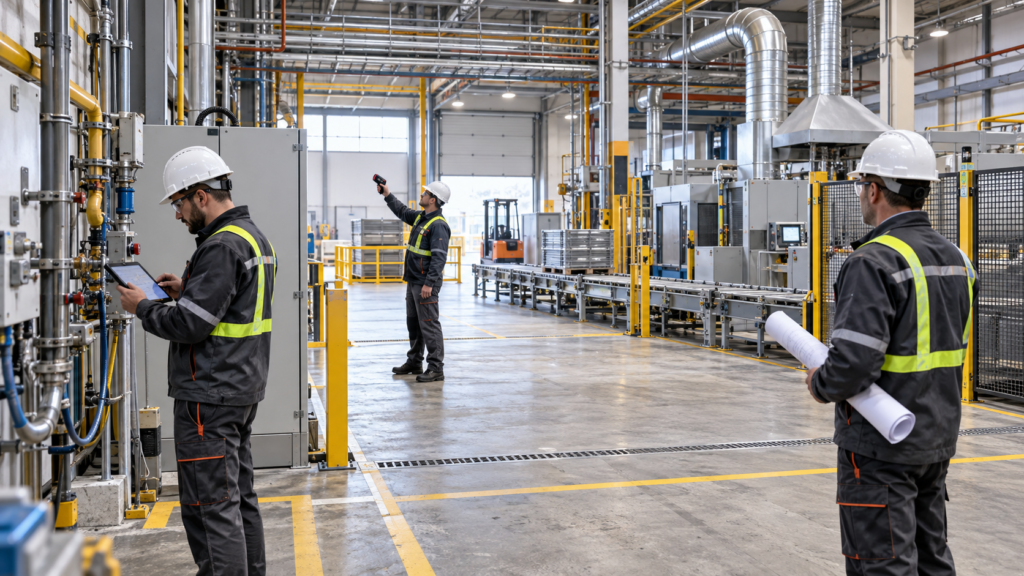
The operating environment is assessed to understand the available utilities, installation space, surrounding equipment, material flow, ventilation, access requirements and existing production arrangement. Site visits may be conducted when necessary and included within the approved scope.
Step 03:
Furnace Concept Development
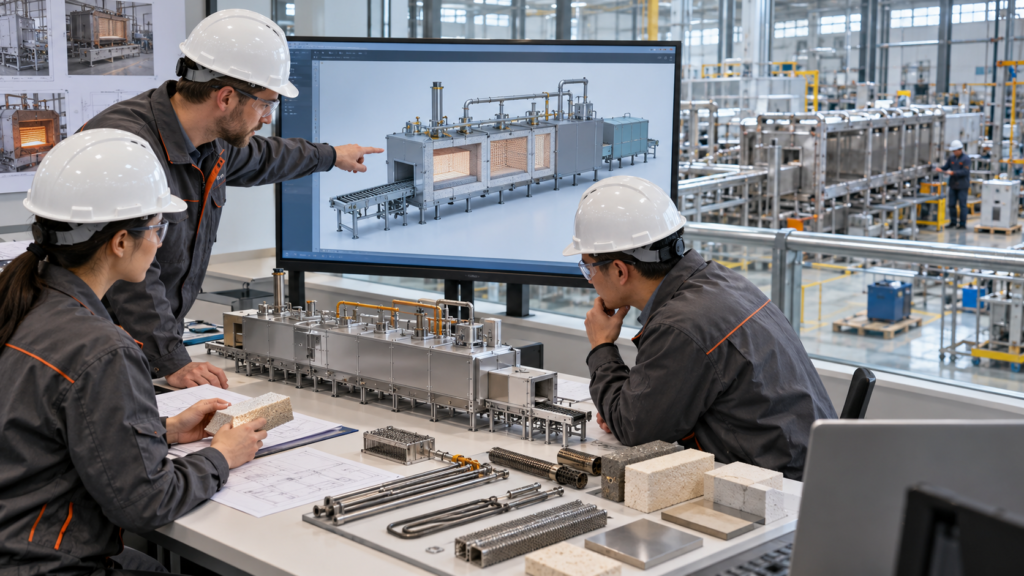
Based on the collected information, we define a suitable furnace concept. This may include the furnace type, chamber configuration, electric or gas heating, batch or continuous operation, material-handling system, heating zones, cooling arrangement and atmosphere-management provisions.
The Right Solution Begins with the Right Information.
A furnace cannot be selected using temperature alone. Its design is influenced by the material, production method, operating cycle, plant environment and the result expected after processing.
Material and Process We review the material type, component dimensions, load weight, initial condition and the thermal process to be performed.
Temperature and Heating Cycle The target operating temperature, heat-up time, soaking period, cooling requirement and expected temperature uniformity are considered.
Production Requirement Batch size, hourly output, daily operating hours, loading frequency and future production requirements help determine the furnace capacity.
Loading and Material Movement Manual loading, trolley loading, conveyor movement, indexing, lifting or other material-handling requirements are evaluated.
Furnace Atmosphere The requirement for air, controlled atmosphere, exhaust management or other process-specific conditions is reviewed.
Plant Utilities
Available electrical power, gas supply, compressed air, cooling water, ventilation and other plant utilities are considered.
Installation Environment Available space, floor condition, access points, equipment clearances and connection with surrounding machinery are assessed.
Controls and Safety Temperature monitoring, process sequencing, alarms, interlocks, motor controls, burner management and operator requirements are defined.
Every Component Must Work as Part of One Process.
An industrial furnace is more than an insulated chamber and a source of heat. Heating, structure, material handling, controls, atmosphere management and operator safety must function together as one coordinated system.
Thermal Engineering Heating capacity, temperature zones, heat distribution, insulation thickness, refractory selection and expected heat losses are considered according to the application.
Mechanical Engineering The furnace structure, doors, chambers, loading systems, conveyors, retorts, muffles, fixtures and expansion requirements are developed for the operating environment.
Heating-System Engineering Electric elements or gas-fired burner systems are selected according to the required temperature, heating capacity, control needs, available utilities and approved specifications.
Electrical and Automation Engineering Electrical panels, temperature controllers, sensors, PLC systems, HMI interfaces, alarms, interlocks and operating sequences can be incorporated into the furnace system.
Materials and Fabrication Construction materials are selected by considering temperature exposure, furnace atmosphere, mechanical load, thermal expansion and compatibility with the process.